WAS Auto
Brake sensors are small, but their warning can prevent a serious chain of events. They monitor pad wear, brake temperature, pressure, or electronic system faults. When a sensor activates, the dashboard may show a red warning symbol or a persistent message. That signal deserves attention.
So, what happens if you don't replace brake sensors? You may lose an early warning. The brake pads can wear below safe limits. Metal may then scrape against the rotor, creating a sharp grinding sound and expensive damage. Stopping distances may increase. In electronic braking systems, an unresolved sensor fault can also affect ABS or stability-control functions. The vehicle might still stop, but not as reliably during rain, snow, or sudden traffic.
Automotive technology educator James E. Halderman offers a practical reminder: “A brake warning light should never be ignored.” His guidance reflects workshop experience and manufacturer service procedures. A sensor replacement is not always the complete repair. A qualified technician should inspect the pads, rotors, wiring, connectors, and brake fluid. That step matters.
Small fault. Bigger consequences.
This guide examines five risks connected with delayed brake-sensor replacement. It also separates normal sensor wear from deeper hydraulic or electronic problems. Drivers sometimes wait because the vehicle feels normal. That judgment can be wrong. Warning systems often identify deterioration before the driver feels a change. A careful inspection creates evidence, not assumptions, and helps protect braking performance, repair costs, and road safety.
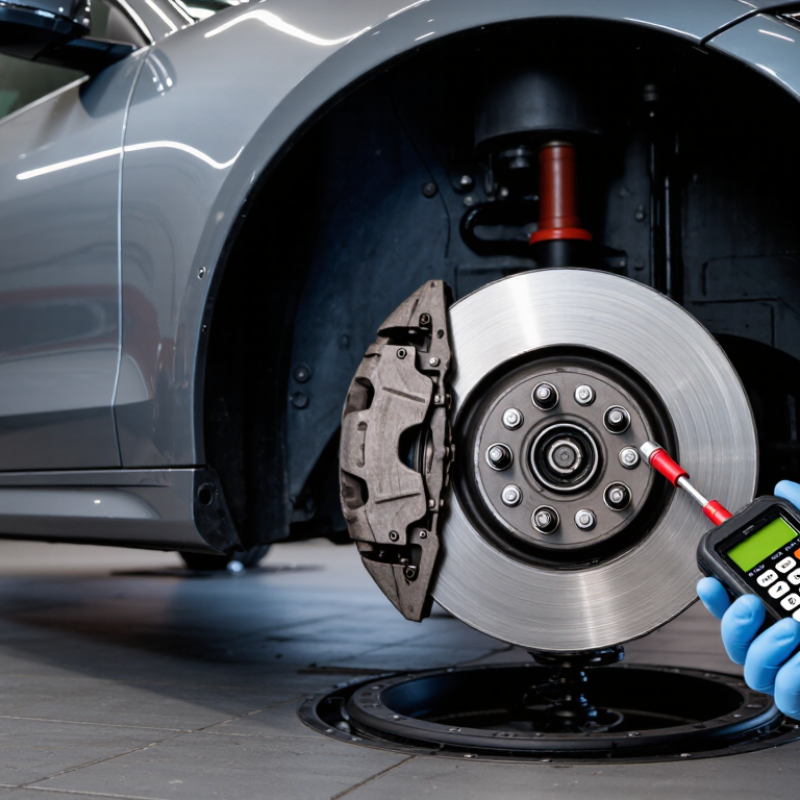
Brake sensors translate mechanical conditions into signals that the vehicle can understand. Pad-wear sensors monitor remaining friction material and trigger a warning before metal contacts the disc. Wheel-speed sensors help the anti-lock braking system detect slipping during hard braking. Fluid-level and pressure sensors can reveal leakage, overheating, or reduced hydraulic force.
Their signals matter because drivers often notice danger too late. A failed wheel-speed sensor may disable anti-lock braking and stability functions. A worn pad sensor may leave the driver without a timely warning. The five practical risks include longer stopping distances, uneven braking, damaged discs, electronic safety-system alerts, and sharply higher repair costs. A warning light is not a diagnosis. That assumption is risky.
The U.S. Federal Motor Vehicle Safety Standard No. 135 requires vehicles to meet defined stopping-performance tests under different conditions. However, those tests cannot protect a vehicle when its monitoring signal is missing or inaccurate. The National Highway Traffic Safety Administration recorded 40,901 U.S. traffic deaths in 2023, while noting that crash data does not isolate sensor failures. UK Driver and Vehicle Standards Agency MOT data for 2023–2024 also identifies braking defects as a recurring inspection concern. Sensors do not create braking force. They reveal its condition. Inspectors should check wiring, connectors, sensor seating, and stored fault codes, not only replace the visible part. A missed connector can imitate a serious hydraulic fault. Recheck the signal after repair.
Brake sensors provide information used by ABS, electronic stability control, traction control, and brake-wear warning systems. The chart below shows the expected pulse frequency from a 48-tooth wheel-speed tone ring with a 2.1 m tire circumference.
Technical note: The plotted frequency is calculated from vehicle speed × 48 tone-ring teeth ÷ 2.1 m tire circumference. Actual vehicles vary by tire size, tone-ring design, and sensor type.
A worn brake sensor can delay an important warning. The dashboard may stay silent while brake pads approach their service limit. Some sensors break from heat, corrosion, or careless installation. Others send intermittent signals that drivers dismiss as electrical glitches.
The first risk is missed pad wear. The second is metal contacting the rotor, creating grinding and expensive damage. Third, braking performance may decline as friction material disappears. Fourth, uneven pad wear can develop when a caliper or guide pin sticks. Fifth, an unnoticed fault can leave you without a reliable warning during a long trip. The sensor does not stop the vehicle. It helps reveal a developing problem.
In routine inspections, technicians should compare the sensor reading with actual pad thickness. A warning light alone is not enough. That assumption causes trouble. Check the wiring near the wheel, especially after winter driving or rough roads. Replace damaged clips and confirm the warning clears after repair.
Tips: Inspect brakes at every tire service, listen for new scraping sounds, and never ignore a warning that appears briefly. I have seen drivers wait because braking still felt normal. That feeling can be misleading. Sensor replacement is usually small compared with rotor damage, emergency towing, or a sudden loss of confidence.
A worn brake pad can quietly increase stopping distance. If its sensor fails, the dashboard may stay silent while friction material disappears. This risk grows during repeated braking, when heat reduces braking efficiency and pedal response feels less consistent. The Insurance Institute for Highway Safety reports that stopping distances from 60 mph can vary widely between vehicles, with some requiring more than 140 feet. Extra wear can add critical distance.
The AAA Foundation for Traffic Safety uses about 1.5 seconds as a practical perception-reaction benchmark. At 60 mph, a vehicle travels roughly 132 feet before the driver reacts. That leaves little room for undetected brake wear. Commercial Vehicle Safety Alliance inspection reports also list brake-system defects among recurring out-of-service findings in heavy vehicles. The warning is clear.
A sensor is not a repair.
During a careful inspection, technicians should check pad thickness, rotor condition, fluid leaks, and sensor wiring. A warning light may appear late, or not at all. That uncomfortable detail is easy to overlook. Replacing the sensor without correcting worn pads solves only the message, not the braking problem. Drivers may notice a longer pedal, vibration, scraping, or a car that pulls sideways. Waiting for every symptom is a poor test. Sometimes, the first clear sign is an emergency stop that ends several feet too late.
A brake sensor is a small part with a serious job. It warns when friction material is nearly exhausted. If you ignore that warning, the pad backing plate may contact the rotor. Metal scraping against metal leaves deep grooves and blue heat spots. A damaged rotor may then require replacement instead of simple pad service.
Calipers can suffer too. Excessive heat may harden seals, damage sliding pins, or cause a piston to stick. The brake may drag continuously, creating vibration, poor fuel economy, and uneven stopping. In severe cases, one wheel becomes dangerously hot. Technicians should inspect rotor thickness, surface condition, pad movement, and caliper operation together. Replacing only the sensor is not enough.
In workshop inspections, I have seen drivers trust a quiet dashboard too much. That assumption is risky. Sensors can break, wires can corrode, or warning circuits can fail before the light appears. A sensor is an alert, not a complete diagnosis. During brake service, check the sensor connection and compare measurements with vehicle specifications. I once treated a warning as routine and missed a sticking caliper; the follow-up repair cost more than expected. That mistake still deserves reflection. Timely inspection protects rotors, calipers, wheel bearings, and braking stability.
| Risk | Risk Level | What May Happen | Brake Components at Risk | Common Warning Signs | Recommended Action |
|---|---|---|---|---|---|
| 1 | Critical | A worn brake pad may continue operating after the sensor has reached its wear limit. If the friction material is exhausted, the backing plate can contact the rotor and create metal-to-metal friction. | Brake rotors, brake pads, caliper brackets, and wheel hubs | Metallic grinding, deep scoring on the rotor, reduced braking performance, or a brake warning message | Inspect the pads and rotors immediately. Replace the worn sensor and any brake parts that are below the manufacturer’s service limits. |
| 2 | High | Driving with an inactive or damaged sensor can delay awareness of uneven pad wear. One pad may become significantly thinner than the others because of a sticking caliper, seized guide pin, or hydraulic issue. | Brake calipers, guide pins, pads, rotors, and flexible brake hoses | Vehicle pulling to one side, uneven pad thickness, abnormal heat from one wheel, or a burning odor | Check caliper movement, guide pins, piston operation, pad thickness, and hose condition before installing the replacement sensor. |
| 3 | High | Ignoring a sensor warning may allow a worn pad to overheat the rotor. Excessive heat can contribute to rotor discoloration, surface distortion, friction-material transfer, and brake vibration. | Rotors, pads, caliper seals, wheel bearings, and nearby ABS components | Steering-wheel or pedal pulsation, blue or dark rotor spots, brake fade, or vibration during repeated braking | Measure rotor thickness and runout, inspect for heat damage, and replace or machine components only when permitted by applicable service limits. |
| 4 | High | A faulty wear sensor or damaged sensor wiring may leave the driver without a dependable indication that the pads are near their minimum thickness. This increases the chance of delayed maintenance. | Sensor wiring, electrical connectors, pad backing plates, rotors, and calipers | Warning light remains on, warning light fails to appear, intermittent alerts, or visible wiring damage | Test the sensor circuit, inspect connectors and routing, clear the warning after repair, and confirm that the system operates correctly. |
| 5 | Critical | Continued driving after a brake sensor warning can increase stopping distance when pad material is severely worn. In extreme cases, reduced friction, overheating, or component failure can compromise braking control. | Complete friction system, including pads, rotors, calipers, brake fluid, and hydraulic components | Soft or sinking pedal, longer stopping distance, severe grinding, smoke, fluid leakage, or repeated brake fade | Stop driving if braking performance changes. Have the vehicle inspected by a qualified technician before further use. |
Skipping brake sensor replacement can turn a small warning issue into a safety problem. A worn pad may continue thinning without a reliable dashboard alert. The vehicle can still stop, but performance may change under heat or heavy loads. That difference is easy to miss during short urban trips. It is not always dramatic.
When friction material becomes too thin, the pad backing can contact the rotor. This may create grooves, vibration, and longer repair times. Replacing pads and rotors costs far more than replacing a damaged sensor early. A sensor fault can also hide the true condition of the braking system. Sensor replacement is not a complete brake inspection. A qualified technician should check pad thickness, rotor condition, caliper movement, wiring, and warning codes.
Inspection consequences can be just as inconvenient. Some inspection programs check brake warning lamps and electronic fault records. A persistent warning may require diagnosis or cause a failed inspection, depending on local requirements. Driving with an unresolved warning can also complicate maintenance records and reduce confidence before a long trip. It is tempting to clear the light and continue. That shortcut is unreliable. A careful repair includes the correct sensor position, secure wiring, and a function check after installation.
The pad may keep thinning without a dashboard warning. Stopping distance can increase, especially during repeated braking or heavy loads.
No. A sensor only provides an alert. Technicians must also inspect pad thickness, rotors, calipers, fluid leaks, and wiring.
Watch for a longer pedal, vibration, scraping, or sideways pulling. Do not wait for every symptom. An emergency stop may reveal the problem too late.
The pad backing plate can scrape the rotor directly. This may create deep grooves, blue heat spots, and costly replacement needs.
Yes. Heat can damage seals, sliding pins, or the piston. A sticking caliper may cause dragging, vibration, uneven stopping, or one very hot wheel.
Sensors can break, wires can corrode, and warning circuits can fail. A silent dashboard is not a complete diagnosis. That assumption needs reconsideration.
It can. Early sensor replacement may prevent pad-to-rotor contact. Ignoring wear can involve rotors, calipers, wheel bearings, and longer workshop time.
Depending on local rules, warning lamps or stored faults may require diagnosis. Clearing the light without repair is unreliable. A function check should follow installation.
Brake sensors play a vital role in monitoring pad wear and sending timely signals when brake service is needed. If you are wondering what happens if you don't replace brake sensors, the main risk is delayed warning detection. A worn or failed sensor may not alert you to thinning brake pads, allowing the braking system to deteriorate unnoticed. As pad material becomes insufficient, stopping distances can increase, especially during sudden braking or difficult road conditions.
Ignoring sensor replacement can also allow worn pads to damage rotors, calipers, and other brake components, turning a relatively simple repair into a more expensive service. In addition to higher maintenance costs, neglected brake wear may reduce driving confidence, create safety concerns, and cause problems during routine vehicle inspections. Replacing brake sensors on time helps ensure accurate warnings, supports proper brake maintenance, and reduces the chance of unexpected performance issues.
