 WAS Auto
WAS Auto
WAS Auto
Maintaining proper brake pad thickness is vital for vehicle safety and performance. According to a report by the Automotive Safety Council, worn brake pads contribute to approximately 30% of driving accidents. Thus, understanding how to check brake pad thickness without removing wheels can be a game-changer for car owners and mechanics alike.
Expert Mike Anderson, a renowned automotive technician, states, "Monitoring brake pad thickness regularly can prevent costly repairs and ensure road safety." This perspective underscores the necessity of innovative techniques in vehicle maintenance.
Using advanced tools, drivers can assess brake pad health without wheel removal. These methods not only save time but also minimize labor costs. However, some might question their accuracy. Balancing convenience with precision remains a challenge in this area. Reliable methods are available. However, it's crucial to understand that each technique may have limitations. Taking proactive measures by knowing how to check brake pad thickness without removing wheels can lead to safer driving experiences and prolonged brake life.
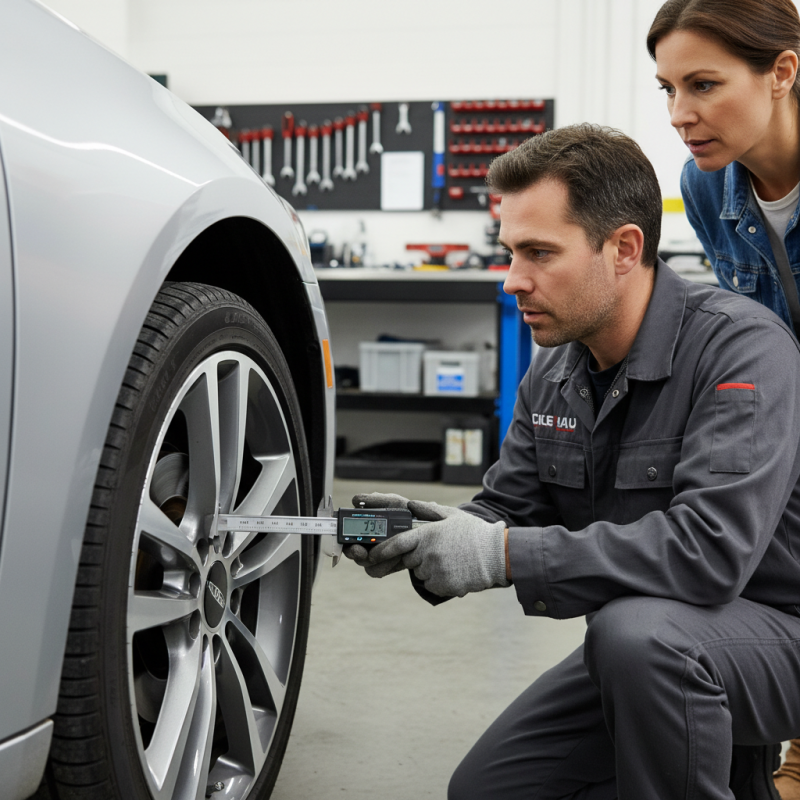
Brake pads play an essential role in vehicle safety. Their thickness is crucial for effective braking. Worn brake pads can lead to reduced stopping power, risking accidents. Keeping an eye on brake pad thickness helps maintain performance and safety on the road. Understanding how to inspect them is vital for every vehicle owner.
One reliable method is using a visual inspection tool. You can often peek through the wheel spokes to gauge thickness. Another approach involves a simple flashlight. Directing light at the pads can highlight wear indicators. It’s important to know what to look for. If the pads are below a quarter inch, consider it a warning.
Regular checks can be overlooked, leading to potential issues. Educate yourself on manual inspection tips too. Learning about brake pad material types can also add depth to understanding their lifespan. All drivers should feel empowered to monitor their brake health effectively. Engaging in this practice fosters safer driving habits and promotes vehicle upkeep.
: Brake pads are essential for effective braking. Their thickness impacts stopping power, ensuring safety on the road.
You can visually inspect brake pads through wheel spokes or use a flashlight to check wear indicators.
A high-pitched squeal usually indicates that brake pads are nearly worn out. It’s a warning to check them.
Healthy brake pads should measure about 1/4 inch thick. If they are closer to 1/16 inch, they need inspection.
About 70% of drivers miss visual checks. This can lead to unexpected brake failures and expensive repairs later.
Ignoring brake warning lights can lead to low brake fluid levels and severe issues, potentially risking safety.
Regular checks are advisable. They prevent sudden failures and ensure reliable brake function in emergencies.
Yes, different brake pad materials affect lifespan and performance. Understanding them helps in maintenance decisions.
Timely brake pad replacement can enhance performance by up to 30%. Regular upkeep is crucial for safety.
While self-checks are important, consulting a professional for inspections is a good practice for comprehensive safety.
Maintaining brake pads is crucial for vehicle safety, and knowing how to check brake pad thickness without removing wheels can help prevent costly repairs and ensure optimal performance. This article outlines several effective methods for assessing brake pad thickness, starting with an understanding of brake pad basics and the importance of thickness. Visual inspection techniques allow drivers to identify wear simply by looking through the wheel, while a brake pad thickness gauge provides precise measurements for more accuracy.
Additionally, utilizing a flashlight to inspect through the wheel can reveal valuable information about the condition of the brake pads. Lastly, interpreting the wear indicators and recognizing warning signs are essential for assessing the need for replacement. Overall, these practical techniques empower vehicle owners to monitor their brake pads effectively without the hassle of wheel removal.
